

 Subscribe for E-mail Alerts
 CCDC Weekly RSS Feed
2025 Vol. 7, No. 49
The 2025 Asia Pacific Congress on Public Health, held in Boao, China, in November 2025, released a transnational consensus and jointly issued the Boao Initiative by Chinese Preventive Medicine Association, World Federation of Public Health Associations, and other six associations from the Asia Pacific region. Centered on the core themes of equity, resilience, and innovation, the Initiative proposes a “Four-in-One” collaborative action plan to address the Asia Pacific region’s severe public health challenges. These challenges include fragmented regional public health governance, widening health inequalities, increasing climate-health risks, and structural constraints on digital transformation. To tackle these issues, the “Four-in-One” plan includes four key components: 1) Strengthening regional governance and building joint prevention and control defenses; 2) Advancing health equity and protecting every life; 3) Enhancing health adaptation to climate change and building a resilient barrier; and 4) Leading digital innovation and empowering smart health systems. The initiative underscores the importance of transnational cooperation to build a comprehensive, inclusive, and sustainable public health framework. It reaffirms the Asia Pacific region’s commitment to global health governance, advocating for shared responsibility to overcome disparities and foster resilience through innovation. Therefore, the Boao Initiative serves as a strategic roadmap for achieving equitable health outcomes and strengthening regional collaboration in public health.
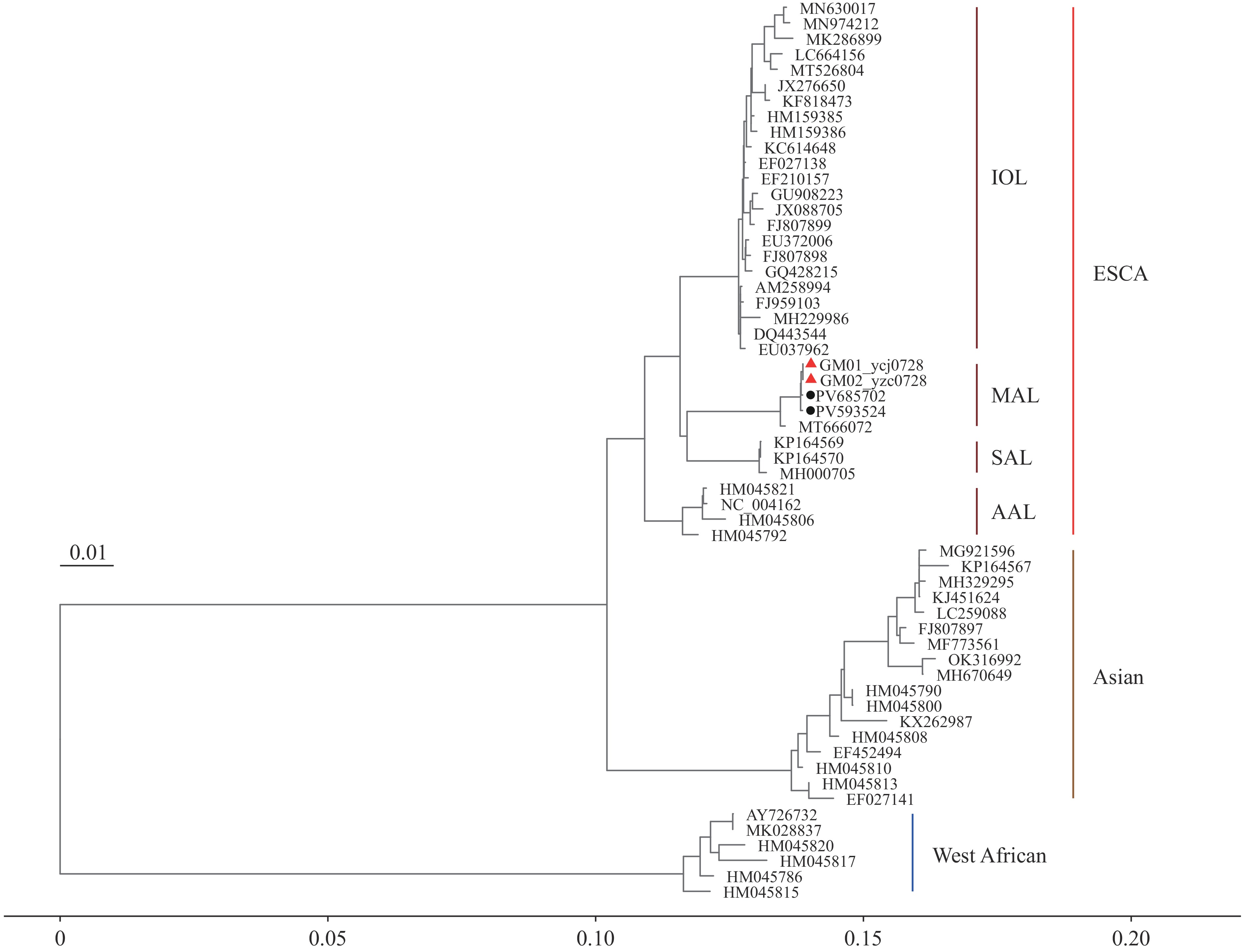
The circulating strain in the recent Chikungunya fever outbreak in Guangdong Province belongs to the East/Central/South African (ECSA) genotype. However, the specific mutations in the viral genome remained unclear.
This study conducted whole-genome sequencing of viral sequences from clinical samples. The results confirmed that the epidemic strain belongs to the Middle African Lineage (MAL) within the ECSA genotype, not the Indian Ocean Lineage (IOL). Further analysis of nucleotide mutations revealed several adaptive mutations compared with the S27 genomic sequence (NC_004162), such as E1-A226V, E2-L210Q, and E2-I211T.
Based on previous genomic surveillance and pathogen studies, mutations like E1-A226V, E2-L210Q, and E2-I211T were generally considered characteristic of IOL within the ECSA genotype and are known to enhance viral replication and transmission efficiency in Aedes albopictus mosquitoes. This study identifies the circulating strain in Guangdong belongs to MAL, which is phylogenetically distinct from IOL, yet also carries these mutations. This suggests these may represent adaptive changes in the MAL strain to a new mosquito host. In Guangdong Province, Ae. albopictus is the predominant mosquito species, while the distribution of Ae. aegypti is relatively limited. The ecological predominance of Ae. albopictus likely serves as a key contributing factor facilitating the rapid importation and subsequent widespread dissemination of the current epidemic strain.
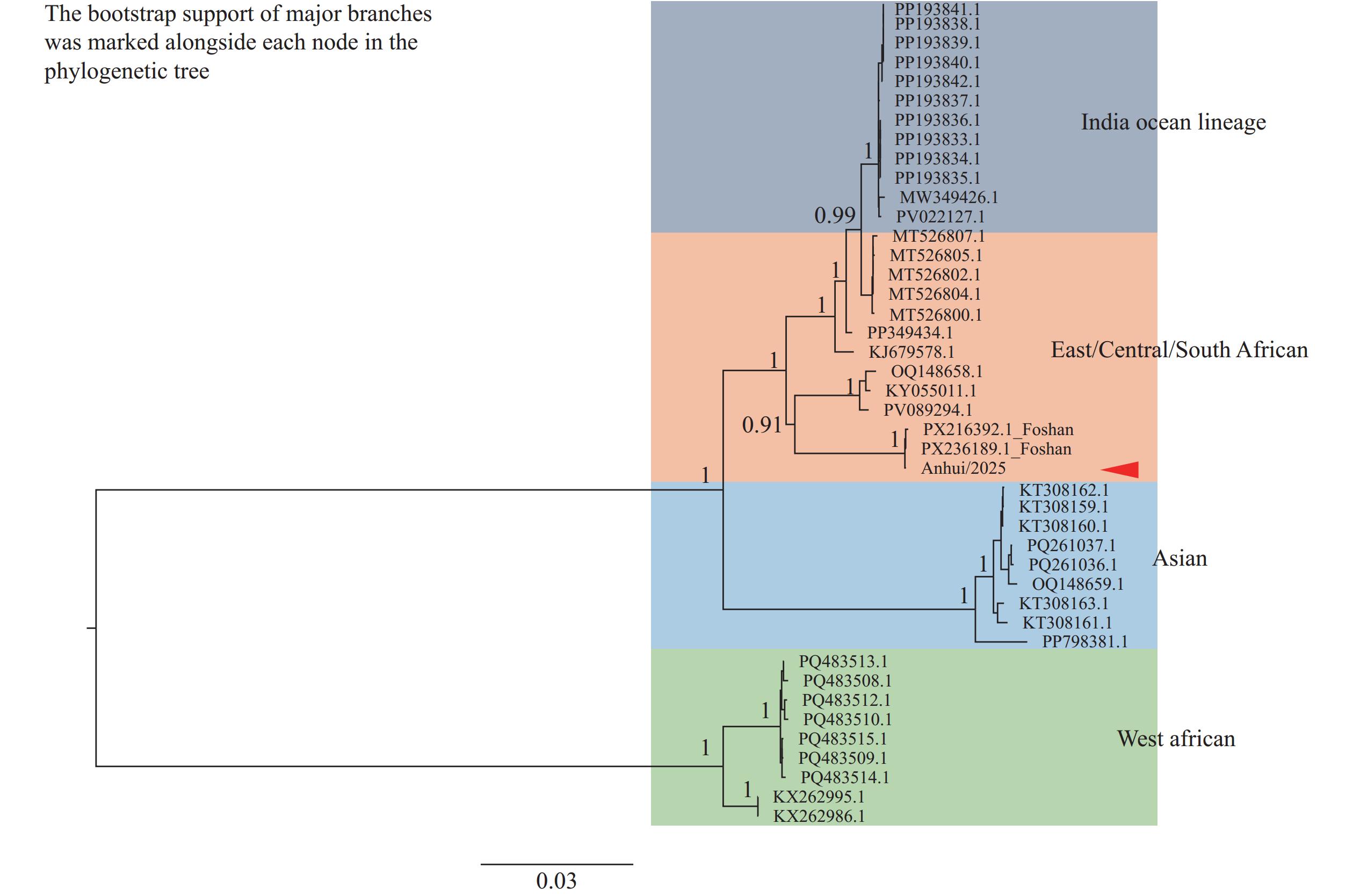
Since China’s first imported Chikungunya fever (CHIKF) case in 2008, 16 provinces have reported cases, primarily imported from endemic areas in Southeast Asia, South Asia, and Africa. Most of China, including Anhui Province, is non-endemic; Anhui had no cases prior to August 2025.
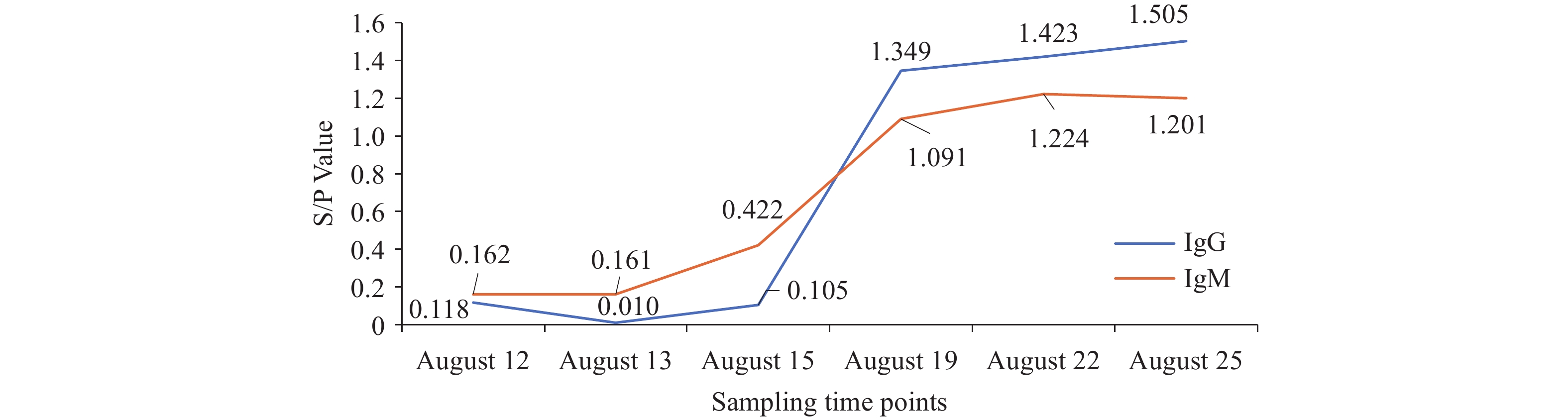
This report documents the first laboratory-confirmed imported case of Chikungunya virus (CHIKV) infection in Anhui Province and presents the complete viral genome sequence. Comprehensive clinical documentation characterizes the patient’s symptoms in detail, including fever, arthralgia, and cutaneous manifestations, thereby addressing a critical gap in the regional clinical profile of CHIKV infection. Comparative analysis of real-time fluorescent quantitative polymerase chain reaction (qPCR) and Enzyme-Linked Immunosorbent Assay (ELISA) results demonstrated that nucleic acid testing provides superior sensitivity during the acute phase of infection.
This case underscores China’s escalating CHIKF risk. Key implications are: 1) Establishing a cross-regional surveillance network is vital for enhanced case and vector detection sensitivity; 2) In non-endemic areas, strengthening public health education on CHIKV risks is essential for imported disease control. Effectively reducing the burden of vector-borne diseases requires strengthened international cooperation, multi-sectoral collaboration, and innovative technologies.