





Advanced Search

Review: Current Status of Clade 2.3.4.4b H5N1 Highly Pathogenic Avian Influenza Virus Transmission in Mammals

View author affiliations
  • Abstract

    Since late 2020, clade 2.3.4.4b H5N1 highly pathogenic avian influenza viruses (HPAIVs) have expanded globally, infecting wild birds, poultry, and an increasing range of mammals. Sustained transmission has occurred in minks and dairy cattle, accompanied by key polymerase basic 2 (PB2) mutations (e.g., E627K, D701N), signaling mammalian adaptation and heightened zoonotic risk. From 2021 to early 2025, 82 human cases, including fatalities in China and the US, underscored rising public health concerns, although no sustained human-to-human transmission has been detected. This review summarizes the epidemiology, transmission dynamics, and molecular evolution of clade 2.3.4.4b H5N1 in mammals. Large-scale outbreaks in US dairy cattle and associated human cases highlight significant cross-species risks, while China’s high poultry vaccination coverage, rapid culling, and nationwide surveillance demonstrate the value of proactive prevention. These contrasting experiences emphasize the need for targeted surveillance, reinforced biosecurity, accelerated countermeasure development, and global coordination under the One Health framework.

  • loading...
  • Conflicts of interest: No conflicts of interest.
  • Funding: Supported by National Natural Science Foundation of China (32500447), China Postdoctoral Science Foundation (2024M760389 and GZC20230401), Heilongjiang Postdoctoral Fund (LBH-Z24045), and Major Project of Guangzhou National Laboratory (GZNL2023A01001).
  • [1] Harfoot R, Webby RJ. H5 influenza, a global update. J Microbiol 2017;55(3):196 − 203. https://doi.org/10.1007/s12275-017-7062-7.
    [2] Lewis NS, Banyard AC, Whittard E, Karibayev T, Al Kafagi T, Chvala I, et al. Emergence and spread of novel H5N8, H5N5 and H5N1 clade 2.3.4.4 highly pathogenic avian influenza in 2020. Emerg Microbes Infect 2021;10(1):148-51. http://dx.doi.org/10.1080/22221751.2021.1872355.
    [3] Leguia M, Garcia-Glaessner A, Muñoz-Saavedra B, Juarez D, Barrera P, Calvo-Mac C, et al. Highly pathogenic avian influenza A (H5N1) in marine mammals and seabirds in Peru. Nat Commun 2023;14(1):5489. https://doi.org/10.1038/s41467-023-41182-0.
    [4] FAO, WHO, WOAH. Updated joint FAO/WHO/WOAH assessment of recent influenza A(H5N1) virus events in animals and people. 2024. https://cdn.who.int/media/docs/default-source/influenza/avian-and-other-zoonotic-influenza/joint-fao-oie-who-preliminary-risk-assessment-associated-with-avian-influenza-a(h5n1)-virus.pdf?sfvrsn=faa6e47e_28&download=true. [2025-5-14].
    [5] Plaza PI, Gamarra-Toledo V, Euguí JR, Lambertucci SA. Recent changes in patterns of mammal infection with highly pathogenic avian influenza A(H5N1) virus worldwide. Emerg Infect Dis 2024;30(3):444 − 52. https://doi.org/10.3201/eid3003.231098.
    [6] United States Department of Agriculture. Highly pathogenic avian influenza H5N1 genotype B3.13 in dairy cattle: national epidemiologic brief. 2024. https://www.aphis.usda.gov/sites/default/files/hpai-dairy-national-epi-brief.pdf. [2025-6-12].
    [7] World Organisation for Animal Health. Statement on avian influenza and mammals. 2023. https://www.woah.org/en/statement-on-avian-influenza-and-mammals/. [2025-6-20].
    [8] World Health Organization. Cumulative number of confirmed human cases for avian influenza A(H5N1) reported to WHO, 2003-2025. 2024. https://cdn.who.int/media/docs/default-source/2021-dha-docs/cumulative-number-of-confirmed-human-cases-for-avian-influenza-a(h5n1)-reported-to-who--2003-2025.pdf. [2025-5-14].
    [9] Bruno A, Alfaro-Núñez A, de Mora D, Armas R, Olmedo M, Garcés J, et al. First case of human infection with highly pathogenic H5 avian Influenza A virus in South America: A new zoonotic pandemic threat for 2023? J Travel Med 2023;30(5):taad032. http://dx.doi.org/10.1093/jtm/taad032.
    [10] Centers for Disease Control and Prevention. Risk to people in the United States from highly pathogenic avian influenza A(H5N1) Viruses. 2025. https://www.cdc.gov/cfa-qualitative-assessments/php/data-research/h5-risk-assessment.html. [2025-5-21].
    [11] Reperant LA, van Amerongen G, van de Bildt MWG, Rimmelzwaan GF, Dobson AP, Osterhaus ADME, et al. Highly pathogenic avian influenza virus (H5N1) infection in red foxes fed infected bird carcasses. Emerg Infect Dis 2008;14(12):1835 − 41. https://doi.org/10.3201/eid1412.080470.
    [12] Elsmo EJ, Wünschmann A, Beckmen KB, Broughton-Neiswanger LE, Buckles EL, Ellis J, et al. Highly pathogenic avian influenza A(H5N1) virus clade 2.3.4.4b infections in wild terrestrial mammals, United States, 2022. Emerg Infect Dis 2023;29(12):2451-60. http://dx.doi.org/10.3201/eid2912.230464.
    [13] UK Government. Confirmed findings of avian influenza virus in non-avian wildlife in 2022. 2022. https://www.gov.uk/government/publications/bird-flu-avian-influenza-findings-in-non-avian-wildlife/confirmed-findings-of-influenza-of-avian-origin-in-non-avian-wildlife#confirmed-findings-of-avian-influenza-virus-in-non-avian-wildlife-in-2022. [2025-6-12].
    [14] European Food Safety Authority, European Centre for Disease Prevention and Control, European Union Reference Laboratory for Avian Influenza, Adlhoch C, Fusaro A, Gonzales JL, et al. Avian influenza overview March-April 2023. EFSA J 2023;21(6):e08039. https://doi.org/10.2903/j.efsa.2023.8039.
    [15] Chestakova IV, van der Linden A, Bellido Martin B, Caliendo V, Vuong O, Thewessen S, et al. High number of HPAI H5 virus infections and antibodies in wild carnivores in the Netherlands, 2020-2022. Emerg Microbes Infect 2023;12(2):2270068. https://doi.org/10.1080/22221751.2023.2270068.
    [16] Vreman S, Kik M, Germeraad E, Heutink R, Harders F, Spierenburg M, et al. Zoonotic mutation of highly pathogenic avian influenza H5N1 virus identified in the brain of multiple wild carnivore species. Pathogens 2023;12(2):168. https://doi.org/10.3390/pathogens12020168.
    [17] Alkie TN, Cox S, Embury-Hyatt C, Stevens B, Pople N, Pybus MJ, et al. Characterization of neurotropic HPAI H5N1 viruses with novel genome constellations and mammalian adaptive mutations in free-living mesocarnivores in Canada. Emerg Microbes Infect 2023;12(1):2186608. https://doi.org/10.1080/22221751.2023.2186608.
    [18] USDA. Detections of highly pathogenic avian influenza in mammals. 2026. https://www.aphis.usda.gov/livestock-poultry-disease/avian/avian-influenza/hpai-detections/mammals. [2025-6-15].
    [19] Agüero M, Monne I, Sánchez A, Zecchin B, Fusaro A, Ruano MJ, et al. Highly pathogenic avian influenza A(H5N1) virus infection in farmed minks, Spain, October 2022. Euro Surveill 2023;28(3):2300001. https://doi.org/10.2807/1560-7917.ES.2023.28.3.2300001.
    [20] WOAH. A/H5N1 virus infections in cats. 2023. https://www.woah.org/app/uploads/2023/07/letter-of-polish-cvo-on-cats-en.pdf. [2025-5-16].
    [21] Frymus T, Belák S, Egberink H, Hofmann-Lehmann R, Marsilio F, Addie DD, et al. Influenza virus infections in cats. Viruses 2021;13(8):1435. https://doi.org/10.3390/v13081435.
    [22] USDA. Federal and state veterinary agencies share update on HPAI detections in Oregon backyard farm, including first H5N1 detections in swine. 2024. https://www.aphis.usda.gov/news/agency-announcements/federal-state-veterinary-agencies-share-update-hpai-detections-oregon. [2025-5-24].
    [23] Center for Infectious Disease Research & Policy. Avian flu detected for first time in US livestock. 2024. https://www.cidrap.umn.edu/avian-influenza-bird-flu/avian-flu-detected-first-time-us-livestock. [2025-5-24].
    [24] USDA. Highly Pathogenic Avian Influenza (HPAI) H5N1 detections in alpacas. 2025. https://www.aphis.usda.gov/livestock-poultry-disease/avian/avian-influenza/hpai-detections/mammals/highly-pathogenic-avian. [2025-5-14].
    [25] Naraharisetti R, Weinberg M, Stoddard B, Stobierski MG, Dodd KA, Wineland N, et al. Highly pathogenic avian influenza A(H5N1) virus infection of indoor domestic cats within dairy industry worker households-Michigan, May 2024. MMWR Morb Mortal Wkly Rep 2025;74(5):61 − 5. https://doi.org/10.15585/mmwr.mm7405a2.
    [26] Banyard AC, Bennison A, Byrne AMP, Reid SM, Lynton-Jenkins JG, Mollett B, et al. Detection and spread of high pathogenicity avian influenza virus H5N1 in the Antarctic region. Nat Commun 2024;15(1):7433. https://doi.org/10.1038/s41467-024-51490-8.
    [27] Puryear W, Sawatzki K, Hill N, Foss A, Stone JJ, Doughty L, et al. Highly pathogenic avian influenza A(H5N1) virus outbreak in New England seals, United States. Emerg Infect Dis 2023;29(4):786 − 91. https://doi.org/10.3201/eid2904.221538.
    [28] ELOBSERVADOR. Preocupación por 552 lobos marinos muertos a pocos kilómetros del Chuy. 2023. https://www.elobservador.com.uy/nota/preocupacion-por-552-lobos-marinos-muertos-a-pocos-kilometros-del-chuy-20231025183255?utm_source=chatgpt.com. [2025-5-25].
    [29] Pardo-Roa C, Nelson MI, Ariyama N, Aguayo C, Almonacid LI, Munoz G, et al. 2023. Cross-species transmission and PB2 mammalian adaptations of highly pathogenic avian influenza A/H5N1 viruses in Chile. BioRxiv 2023. http://dx.doi.org/10.1101/2023.06.30.547205.
    [30] British Antarctic Survey. Antarctica. https://www.bas.ac.uk/about/antarctica/. [2026-2-13].
    [31] CDC. H5 Bird Flu: current situation. 2026. https://www.cdc.gov/bird-flu/situation-summary/. [2026-2-13].
    [32] Burrough ER, Magstadt DR, Petersen B, Timmermans SJ, Gauger PC, Zhang JQ, et al. Highly pathogenic avian influenza A(H5N1) clade 2.3.4.4b virus infection in domestic dairy cattle and cats, United States, 2024. Emerg Infect Dis 2024;30(7):1335-43. http://dx.doi.org/10.3201/eid3007.240508.
    [33] Garg S, Reed C, Davis CT, Uyeki TM, Behravesh CB, Kniss K, et al. Outbreak of Highly Pathogenic Avian Influenza A(H5N1) Viruses in U.S. Dairy Cattle and Detection of Two Human Cases - United States, 2024. MMWR Morb Mortal Wkly Rep. 2024 May 30;73(21):501-505.
    [34] USDA. USDA announces new federal order, begins national milk testing strategy to address H5N1 in dairy herds. 2024. https://www.aphis.usda.gov/news/agency-announcements/usda-announces-new-federal-order-begins-national-milk-testing-strategy. [2025-12-11].
    [35] FAO, WHO, WOAH. Updated joint FAO/WHO/WOAH public health assessment of recent influenza A(H5) virus events in animals and people. 2025. https://www.woah.org/app/uploads/2025/04/2025-04-17-fao-woah-who-h5n1-assessment.pdf?utm_source=chatgpt.com. [2025-5-28].
    [36] CDC. CDC A(H5N1) bird flu response update, July 19, 2024. 2024. https://www.cdc.gov/bird-flu/spotlights/h5n1-response-07192024.html. [2025-5-28].
    [37] CDC. Current Situation: H5N1 Bird Flu in People. 2025. https://www.cdc.gov/bird-flu/situation-summary/inhumans.html?utm_source=chatgpt.com. [2025-6-11].
    [38] Guo J, Song WT, Ni XS, Liu W, Wu JW, Xia W, et al. Pathogen change of avian influenza virus in the live poultry market before and after vaccination of poultry in southern China. Virol J 2021;18(1):213. https://doi.org/10.1186/s12985-021-01683-0.
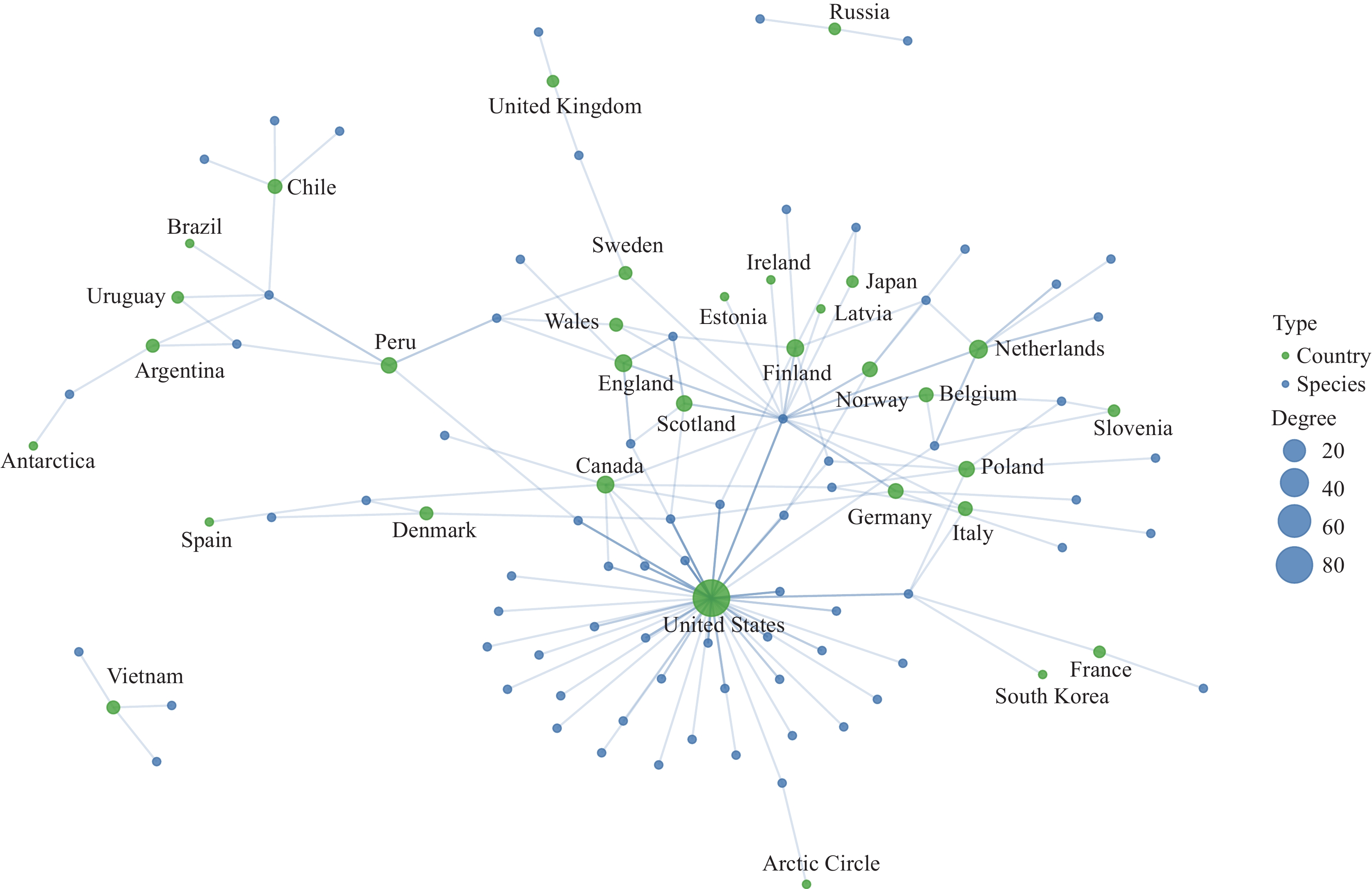
  • FIGURE 1.  Network of avian influenza virus spread across countries and host species.

    Note: Green nodes represent host species, and blue nodes represent countries. Node size reflects the degree (number of documented host–country connections). Edges indicate confirmed reports of H5N1 infection in a specific host species within a given country. The network is literature-based and not derived from viral genomic sequence data. It was constructed using the host–country occurrence dataset summarized in Supplementary Table S1 and generated in R (version 4.4.3), R Foundation for Statistical Computing, Vienna, Austria.

    Abbreviation: USA=United States of America; UK=United Kingdom.

    FIGURE 2.  Transmission pathways of clade 2.3.4.4b H5N1 HPAIVs between humans and animal hosts.

    Note:Arrows represent potential transmission directions supported by evidence reported in peer-reviewed literature or official outbreak investigations. Only pathways with documented epidemiological, environmental, or behavioral links, such as direct contact, predation or scavenging, shared environments, or spillover from infected poultry, were included. The figure illustrates cross-species transmission dynamics and associated public health risks. It was created with BioRender.com (https://biorender.com).

    Abbreviation: HPAIVs=highly pathogenic avian influenza viruses.

    FIGURE 3.  Epidemiology of human infections with clade 2.3.4.4b H5N1 HPAIVs, 2021–2025. (A) Number of human infection cases by year, 2021–2025. (B) Geographical distribution of human infection cases, 2021–2025 (N=82).

    Abbreviation: HPAIVs=highly pathogenic avian influenza viruses; USA=United States of America; UK=United Kingdom.

    FIGURE 4.  Associations between mammalian H5N1 HPAIVs outbreaks and human cases.

    Note:It was created with GraphPad Prism 9.5.0, GraphPad Software, San Diego, California, USA. Associations are established based on temporal and spatial co-occurrence of outbreaks in mammals and human infections reported in the literature or official surveillance data. Only confirmed human cases with documented exposure to infected mammals or affected farms are included. This figure does not imply direct causality but illustrates potential exposure pathways. It was created with RAWGraphs 2.0. https://app.rawgraphs.io/.

    Abbreviation: HPAIVs=highly pathogenic avian influenza viruses; USA=United States of America; UK=United Kingdom.

Citation:

通讯作者: 陈斌, bchen63@163.com
  • 1. 

    沈阳化工大学材料科学与工程学院 沈阳 110142

  1. 本站搜索
  2. 百度学术搜索
  3. 万方数据库搜索
  4. CNKI搜索
Turn off MathJax
Article Contents

Article Metrics

Article views(239) PDF downloads(1) Cited by()

Share

Related

Current Status of Clade 2.3.4.4b H5N1 Highly Pathogenic Avian Influenza Virus Transmission in Mammals

View author affiliations

Abstract

Since late 2020, clade 2.3.4.4b H5N1 highly pathogenic avian influenza viruses (HPAIVs) have expanded globally, infecting wild birds, poultry, and an increasing range of mammals. Sustained transmission has occurred in minks and dairy cattle, accompanied by key polymerase basic 2 (PB2) mutations (e.g., E627K, D701N), signaling mammalian adaptation and heightened zoonotic risk. From 2021 to early 2025, 82 human cases, including fatalities in China and the US, underscored rising public health concerns, although no sustained human-to-human transmission has been detected. This review summarizes the epidemiology, transmission dynamics, and molecular evolution of clade 2.3.4.4b H5N1 in mammals. Large-scale outbreaks in US dairy cattle and associated human cases highlight significant cross-species risks, while China’s high poultry vaccination coverage, rapid culling, and nationwide surveillance demonstrate the value of proactive prevention. These contrasting experiences emphasize the need for targeted surveillance, reinforced biosecurity, accelerated countermeasure development, and global coordination under the One Health framework.

  • 1. College of Wildlife and Protected Area, Northeast Forestry University, Harbin City, Heilongjiang Province, China
  • 2. School of Public Health, Peking University, Beijing, China
  • Corresponding authors:

    Zhongwei Jia, jiazw@bjmu.edu.cn

    Hongliang Chai, Hongliang_chai@hotmail.com

  • Funding: Supported by National Natural Science Foundation of China (32500447), China Postdoctoral Science Foundation (2024M760389 and GZC20230401), Heilongjiang Postdoctoral Fund (LBH-Z24045), and Major Project of Guangzhou National Laboratory (GZNL2023A01001).
  • Online Date: February 20 2026
    Issue Date: February 20 2026
    doi: 10.46234/ccdcw2026.027
  • Since the emergence of highly pathogenic avian influenza virus (HPAIV) H5N1 in Guangdong Province, China, in 1996, it has evolved into multiple genetic clades through ongoing mutation and reassortment (1). In October 2020, a novel clade 2.3.4.4b H5N1 HPAIV, resulting from reassortment between H5N8 HPAIVs and European HxN1 low pathogenic avian influenza viruses (LPAIVs), was first detected in wild ducks in the Netherlands (2). Its extensive spread among wild birds and poultry, driven by migratory birds, has caused unprecedented ecological and economic impacts (3).

    Since 2021, clade 2.3.4.4b H5N1 HPAIVs have increasingly been detected in diverse mammalian hosts (4). Several isolates harbor key amino acid substitutions associated with enhanced mammalian adaptation (5), indicating improved host compatibility. Recently, infections in dairy cattle in the United States (US), accompanied by human cases linked to direct animal contact, have highlighted a novel transmission route (6). This development signals a potential breach of established host barriers and underscores the need for heightened vigilance regarding zoonotic risks (7).

    This review synthesizes current knowledge of clade 2.3.4.4b H5N1 HPAIV infections in mammals, emphasizing epidemiological trends, links to human cases, and mechanisms of cross-species transmission. Its aim is to inform surveillance, risk assessment, and prevention strategies for both animal and human health.

    • From 2021 to 2025, surveillance data from the Food and Agriculture Organization of the United Nations (FAO), the World Health Organization (WHO), and the World Organization for Animal Health (WOAH) indicate a marked increase in clade 2.3.4.4b H5N1 HPAIV infections in mammals, accompanied by sporadic human cases (4). During this period, 71 mammalian species across 32 countries were affected, with both host diversity and geographic range expanding annually (Figure 1 and Supplementary Table S1).

      Figure 1. 

      Network of avian influenza virus spread across countries and host species.

      Note: Green nodes represent host species, and blue nodes represent countries. Node size reflects the degree (number of documented host–country connections). Edges indicate confirmed reports of H5N1 infection in a specific host species within a given country. The network is literature-based and not derived from viral genomic sequence data. It was constructed using the host–country occurrence dataset summarized in Supplementary Table S1 and generated in R (version 4.4.3), R Foundation for Statistical Computing, Vienna, Austria.

      Abbreviation: USA=United States of America; UK=United Kingdom.

      In 2021, mammalian infections were primarily confined to Europe and involved a limited number of species. By 2023, cases had spread extensively across North and South America, Europe, and parts of Antarctica, representing the maximum observed species diversity and geographic spread. Although the overall range stabilized in 2024–2025, new host species, such as small rodents and additional domestic animals, were identified, indicating ongoing viral adaptation and ecological persistence.

      Recurrent infections were documented in certain species, notably marine mammals (e.g., sea lions, seals), farmed carnivores (e.g., minks), and wild carnivores (e.g., red fox, Vulpes vulpes) (Figure 2). Genetic analyses identified key mutations associated with mammalian adaptation, suggesting enhanced replication efficiency in these hosts and raising concerns about increased zoonotic potential.
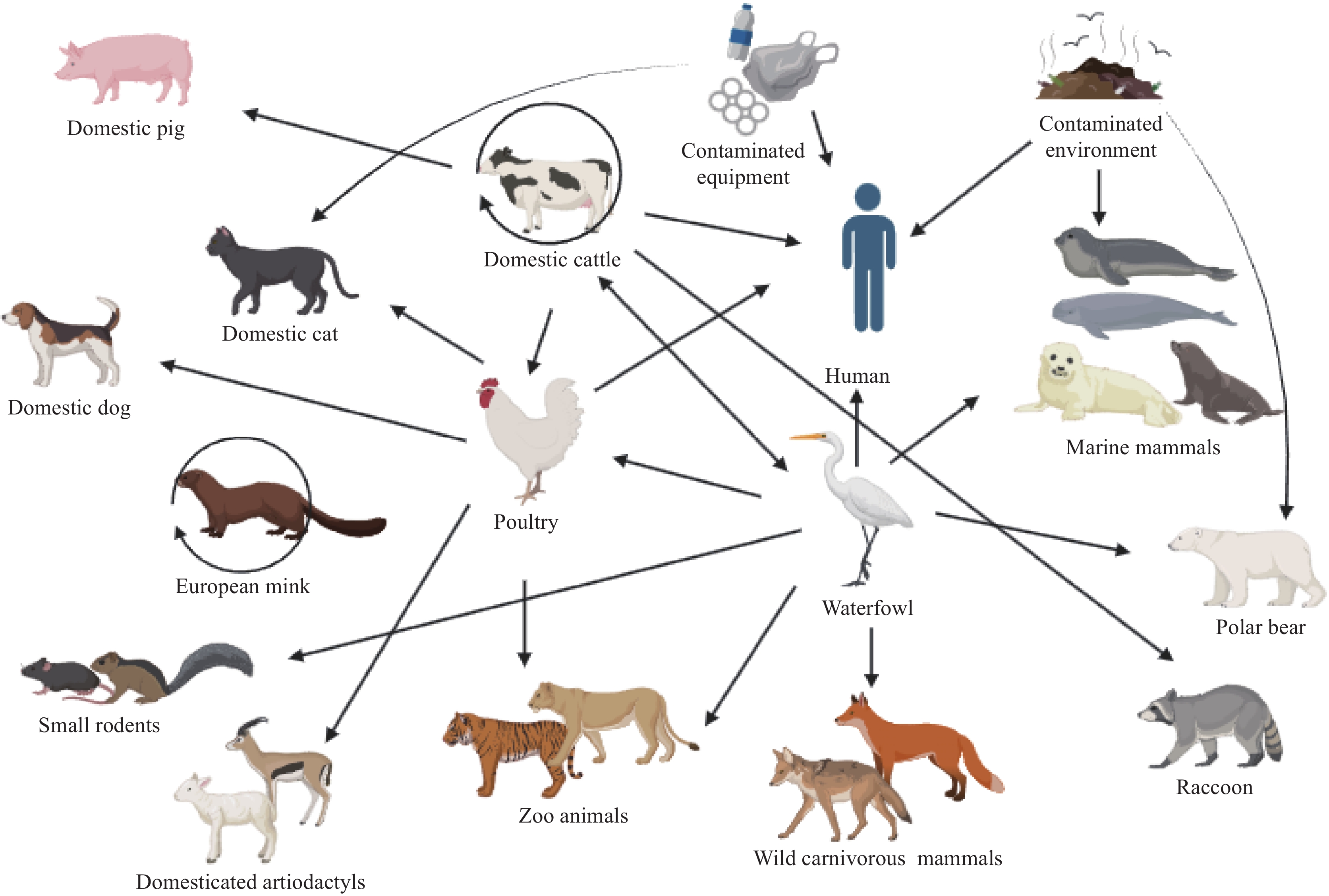
      Figure 2. 

      Transmission pathways of clade 2.3.4.4b H5N1 HPAIVs between humans and animal hosts.

      Note:Arrows represent potential transmission directions supported by evidence reported in peer-reviewed literature or official outbreak investigations. Only pathways with documented epidemiological, environmental, or behavioral links, such as direct contact, predation or scavenging, shared environments, or spillover from infected poultry, were included. The figure illustrates cross-species transmission dynamics and associated public health risks. It was created with BioRender.com (https://biorender.com).

      Abbreviation: HPAIVs=highly pathogenic avian influenza viruses.

      Between 2021 and February 2025, 82 confirmed human infections with clade 2.3.4.4b H5N1 HPAIVs were reported across Asia, the Americas, and Europe, including two fatal cases (China and the US) (Figure 3). Although rare, such infections have attracted growing attention (8). Most cases involved direct or indirect contact with infected animals (9), coinciding with the detection of H5N1 HPAIVs in US dairy cattle in 2024 (10) (Figure 4). To date, there is no evidence of sustained human-to-human transmission, underscoring the importance of continued genomic surveillance in both animal and human populations.
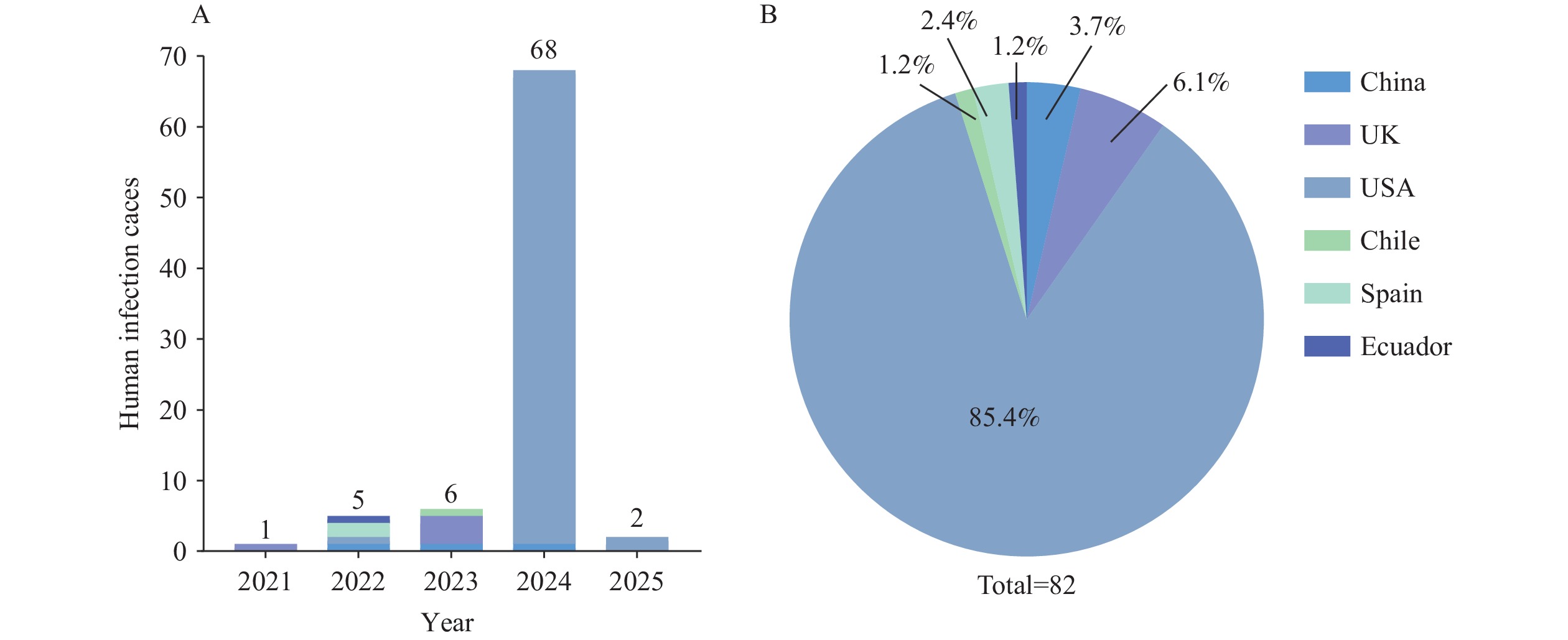
      Figure 3. 

      Epidemiology of human infections with clade 2.3.4.4b H5N1 HPAIVs, 2021–2025. (A) Number of human infection cases by year, 2021–2025. (B) Geographical distribution of human infection cases, 2021–2025 (N=82).

      Abbreviation: HPAIVs=highly pathogenic avian influenza viruses; USA=United States of America; UK=United Kingdom.
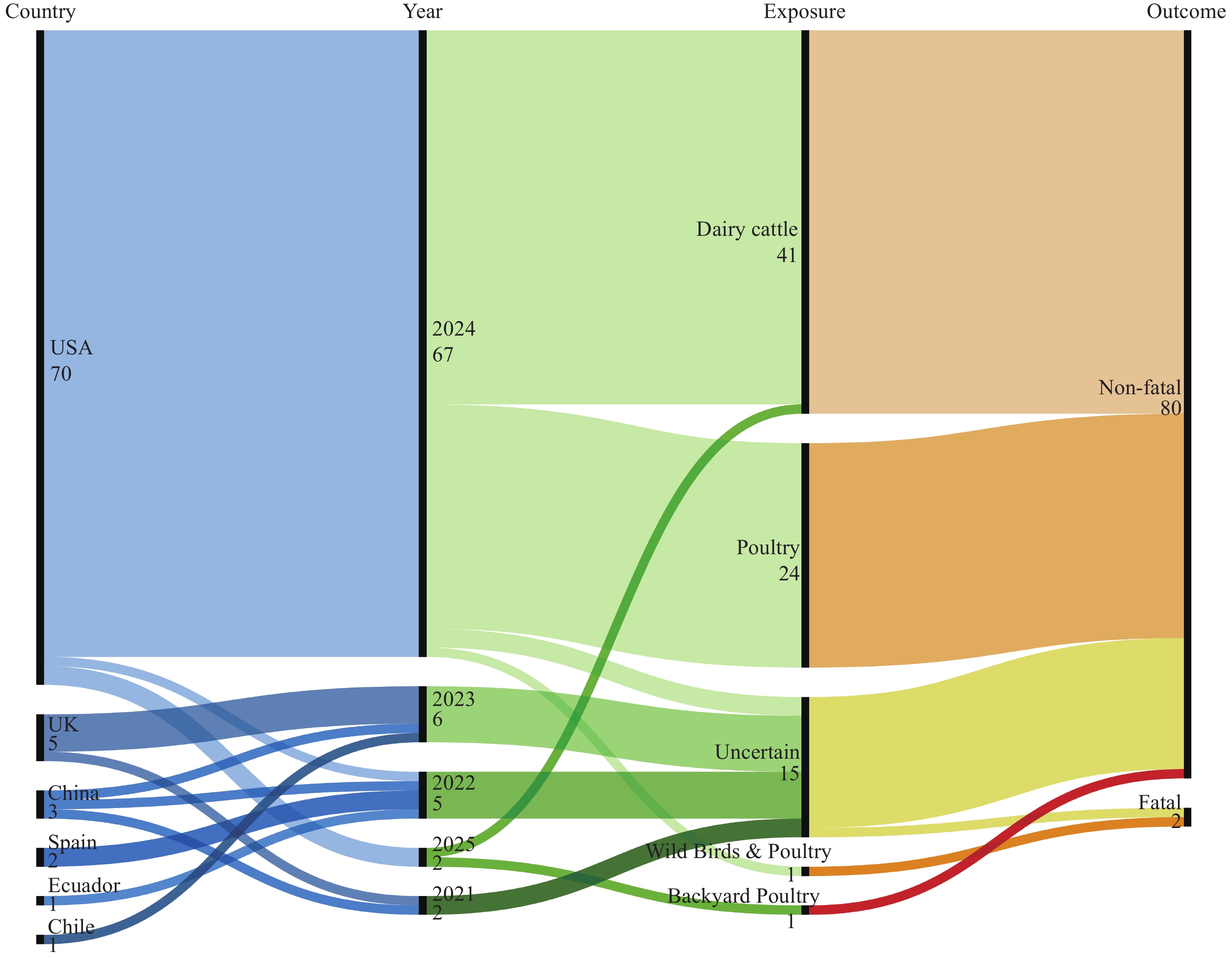
      Figure 4. 

      Associations between mammalian H5N1 HPAIVs outbreaks and human cases.

      Note:It was created with GraphPad Prism 9.5.0, GraphPad Software, San Diego, California, USA. Associations are established based on temporal and spatial co-occurrence of outbreaks in mammals and human infections reported in the literature or official surveillance data. Only confirmed human cases with documented exposure to infected mammals or affected farms are included. This figure does not imply direct causality but illustrates potential exposure pathways. It was created with RAWGraphs 2.0. https://app.rawgraphs.io/.

      Abbreviation: HPAIVs=highly pathogenic avian influenza viruses; USA=United States of America; UK=United Kingdom.

    • Due to its wide distribution, frequent predation on wild birds, and high clinical detectability, the red fox is the most commonly reported terrestrial wild mammal infected with clade 2.3.4.4b H5N1 HPAIVs, serving as a sentinel species for mammalian surveillance (11). Since 2021, infections have been documented across Europe, North America, and Asia, including the Netherlands, Finland, Poland, the US, Canada, and Japan (1214).

      In the Netherlands (May 2021–December 2022), foxes, polecats, otters, martens (15), and badgers were infected with clade 2.3.4.4b H5N1 HPAIVs that were genetically similar to local avian strains. Several fox and polecat isolates carried the polymerase basic 2 (PB2) E627K mutation, indicative of mammalian adaptation (16). In Canada (2021–2022), foxes exhibited severe neurological disease with meningoencephalitis and pneumonia, confirming neurotropism (17). In the US (2022), 67 wild carnivores from 10 states, including foxes, skunks, raccoons (Procyon lotor), bobcats (Lynx rufus), coyotes (Canis latrans), and fishers (Pekania pennanti), tested positive for clade 2.3.4.4b H5N1 HPAIVs (18), with many presenting with central nervous system lesions (12).

      Habitat overlap among infected carnivores, wild birds, and areas of human activity may increase environmental contamination and incidental human exposure.

    • In October 2022, farmed minks in Spain experienced a clade 2.3.4.4b H5N1 outbreak with the PB2 T271A mutation, demonstrating efficient farm-level transmission; minks can act as “mixing vessels” for avian and human influenza viruses (7,18). Control measures included culling, enhanced biosecurity, and staff monitoring (19). In June 2023, multiple felids in Poland were infected with related viruses, showing rapid disease progression and severe respiratory and neurological symptoms (20). Since 2022, clade 2.3.4.4b H5N1 has caused fatal infections in domestic cats across Europe and North America, posing zoonotic risks through direct or indirect exposure (18). Most cases involved predation on infected birds or poultry (Figure 2), although some occurred without clear outdoor contact, suggesting alternative transmission routes (21). There is no evidence that sustained cat-to-cat transmission is a major pathway (22). Only isolated cases and experimental data exist, with no systematic culling or official control measures. Clear policy guidance and transparent response strategies are needed.

      In October 2024, clade 2.3.4.4b H5N1 HPAIVs were detected in US pigs without evidence of sustained transmission (22) and for the first time in goats (Capra aegagrus hircus) (23) and alpacas (Lama glama) (24), likely resulting from cohabitation with infected poultry. Continued surveillance of domestic mammals, particularly felines and pigs, is essential given their potential roles in viral adaptation and transmission to humans (25).

    • Since 2021, clade 2.3.4.4b H5N1 HPAIVs have caused unprecedented mortality events among marine mammals across multiple coastal regions (26). Early cases included a harbor porpoise (Phocoena phocoena) in Sweden in June 2022, followed by large outbreaks in harbor seals (Phoca vitulina) and gray seals (Halichoerus grypus) along the northeastern US and eastern Canada, temporally coinciding with massive seabird die-offs (27). In 2023, widespread outbreaks affected marine mammals in South America and Antarctica, including sea lions, fur seals, and southern elephant seals, likely facilitated by migratory seabirds (Figure 2), resulting in historic multi-country mortality events (28). Viral isolates from Peru and Chile harbored mammalian-adaptive PB2 mutations (D701N and Q591K), indicating enhanced viral adaptation and suggesting the potential for sustained circulation within marine ecosystems (29).

      Control efforts rely on surveillance, protection, and public education, as no vaccines or antiviral drugs are available. Dense seabird and pinniped aggregations in Antarctica pose a risk for outbreaks (30), and the presence of mammalian-adaptive mutations raises concerns about possible transmission among marine mammals.

    • Although clade 2.3.4.4b H5N1 infections in China remain limited, international outbreaks provide valuable lessons. Large-scale epidemics in US dairy cattle and associated human cases offer key insights into viral adaptation, transmission, and public health response, informing efforts to strengthen early warning systems and emergency preparedness in China.

      Since March 2024, clade 2.3.4.4b H5N1 HPAIVs have been detected in more than 13,000 wild birds, 175 million poultry, and over 1,000 dairy herds across 17 US states (31). Dairy cattle, previously considered largely resistant to influenza A viruses (IAVs), were found to be susceptible following the emergence of genotypes B3.13 and D1.1, both capable of efficient infection in lactating cows (32). Molecular analyses traced B3.13 to wild birds, followed by spread to wildlife and poultry. The virus has been identified in unpasteurized milk, with some cows remaining asymptomatic, suggesting silent transmission (33). In response, authorities implemented targeted testing, movement restrictions, milk handling and pasteurization protocols and enhanced biosecurity measures for farm personnel, effectively mitigating further spread (34).

      From February 2024 to June 2025, 70 human infections were reported in the US, including one fatal case. Most cases were linked to direct contact with infected dairy cattle, poultry, or backyard flocks, confirming animal-to-human transmission (35). Genetic analyses identified D1.1 as the predominant lineage, closely related to dairy cattle and poultry isolates, and several human cases carried mammalian-adaptive PB2 mutations, suggesting ongoing adaptation (36). These findings underscore the importance of integrated surveillance and coordinated interventions.

    • The WHO notes that H5N1 viruses are widespread among wild birds and poultry worldwide and occasionally cause human infections. Most human cases are associated with contact with infected birds or contaminated environments, with no evidence of sustained human-to-human transmission (37). Clade 2.3.4.4b viruses pose cross-species transmission risks, necessitating multi-species surveillance, strengthened biosecurity, vaccine development, and comprehensive risk management. China emphasizes high vaccination coverage, rapid culling, and nationwide monitoring (38), while international efforts focus on farm-level control measures (19,34).

      Under a One Health framework, global strategies should integrate cross-species surveillance, biosecurity, risk communication, and occupational protection to prevent zoonotic transmission and safeguard both human and animal health.

    • We also gratefully acknowledge the contributions and dataprovided by the following institutions: the UK Government (Department for Environment, Food & Rural Affairs); the US Department of AgricultureAnimal and Plant Health Inspection Service (USDAAPHIS); the European Food Safety Authority (EFSA); the European Centre for Disease Prevention and Control (ECDC); the World Animal HealthInformation System (WAHIS); the Center forInfectious Disease Research and Policy (CIDRAP); the Ministry of Agriculture and Rural Affairs of the People’s Republic of China.

  • Conflicts of interest: No conflicts of interest.
  • Reference (38)

    Citation:

    Catalog

      /

      DownLoad:  Full-Size Img  PowerPoint
      Return
      Return