


 Download:




-
Introduction: Lymphocytic choriomeningitis virus (LCMV) is a globally distributed zoonotic pathogen transmitted primarily by rodents. Its nonspecific clinical presentation in the general population frequently results in underdiagnosis and underreporting. To date, no large-scale seroprevalence surveys of LCMV have been conducted in China.
Methods: During 2023, this study collected 661 serum/plasma samples from healthy individuals and tested for anti-LCMV IgG antibodies using an enzyme-linked immunosorbent assay (ELISA). Samples tested positive by ELISA underwent confirmatory testing via indirect immunofluorescence analysis (IFA) and neutralization assay (NTA).
Results: ELISA detected anti-LCMV IgG antibodies in 18.31% (121/661) of samples, while IFA confirmed seropositivity in 1.97% (13/661). Four samples demonstrated neutralizing antibody activity with reduced viral infectivity. Seropositive cases were sporadically distributed across the study region, with farmers representing the predominant occupational group. Key at-risk populations identified included farmers, rural residents, and individuals with lower educational attainment.
Conclusion: This study provides the first serological evidence of past LCMV infections in humans in Gansu Province. Targeted health education interventions tailored to high-risk populations are recommended to reduce future transmission.
-
Lymphocytic choriomeningitis virus (LCMV) is an enveloped, segmented negative-sense RNA virus within the Arenaviridae family, classified as an Old World mammarenavirus. The common house mouse (Mus musculus) serves as the primary host, and due to its global distribution, LCMV represents the most widely distributed mammarenavirus (1). Human infection occurs through exposure to fresh urine, droppings, saliva, or nesting materials from infected rodents. Transmission can also occur via organ transplants from infected donors (2). Global seroprevalence studies indicate that 2%–5% of human population show evidence of past LCMV infection. In immunocompetent individuals, LCMV infection typically presents with mild symptoms including fever, sore throat, or aseptic meningitis. However, infection during pregnancy can result in severe fetal outcomes. Although several antiviral agents have shown activity against LCMV in preclinical studies, no FDA-approved treatments currently exist (3), leaving LCMV as a neglected zoonotic pathogen. As the prototype Arenaviridae virus, LCMV has gained increased attention following its inclusion in the World Health Organization's 2014 priority pathogens report.
Gansu Province, located in northwestern China, occupies a unique geographical position with abundant wildlife resources, including diverse rodent populations. These ecological characteristics make the province particularly relevant for investigating zoonotic disease transmission dynamics.
Despite the recognized risk of LCMV infection, no population-based serological surveys have been conducted in China. This study presents the first evidence of past LCMV infections in Gansu Province and underscores the need for enhanced surveillance of this neglected pathogen.
Between January and December 2023, we collected 661 serum/plasma samples from healthy individuals at 13 sites throughout Gansu Province. The study included participants across all age groups. Anti-LCMV IgG antibodies were detected using an enzyme-linked immunosorbent assay (ELISA) kit (RecombivirusTM Human Anti-Lymphocytic Choriomeningitis Virus IgG, Cat.#AE-3-240-1, ALPHA DIAGNOSTIC INTERNATIONAL, U.S.). Samples testing positive by ELISA underwent confirmatory testing through indirect immunofluorescence analysis (IFA) with LCMV Armstrong strain-infected BHK-21 cells and a neutralization assay (NTA). Participants with LCMV-specific IgG antibodies were interviewed using a structured questionnaire designed to collect basic demographic information, epidemiological background, and exposure history. Data were analyzed using GraphPad Prism 10.1.2 (GraphPad Software, Inc., Boston, USA) and SPSS Statistics 24 (IBM, New York, USA). Statistical significance was defined as P<0.05.
ELISA testing revealed an overall LCMV IgG antibody prevalence of 18.31% (121/661) among healthy individuals. Seropositive and seronegative groups differed significantly (P<0.0001) (Figure 1). IFA confirmed 13 samples (1.97%, 13/661) as positive. Geographic distribution of positive cases included Jiuquan (3 cases), Pingliang (1 case), Lanzhou (4 cases), Baiyin (1 case), Zhangye (1 case), Tianshui (2 cases), and Qingyang (1 case), with no apparent clustering pattern.
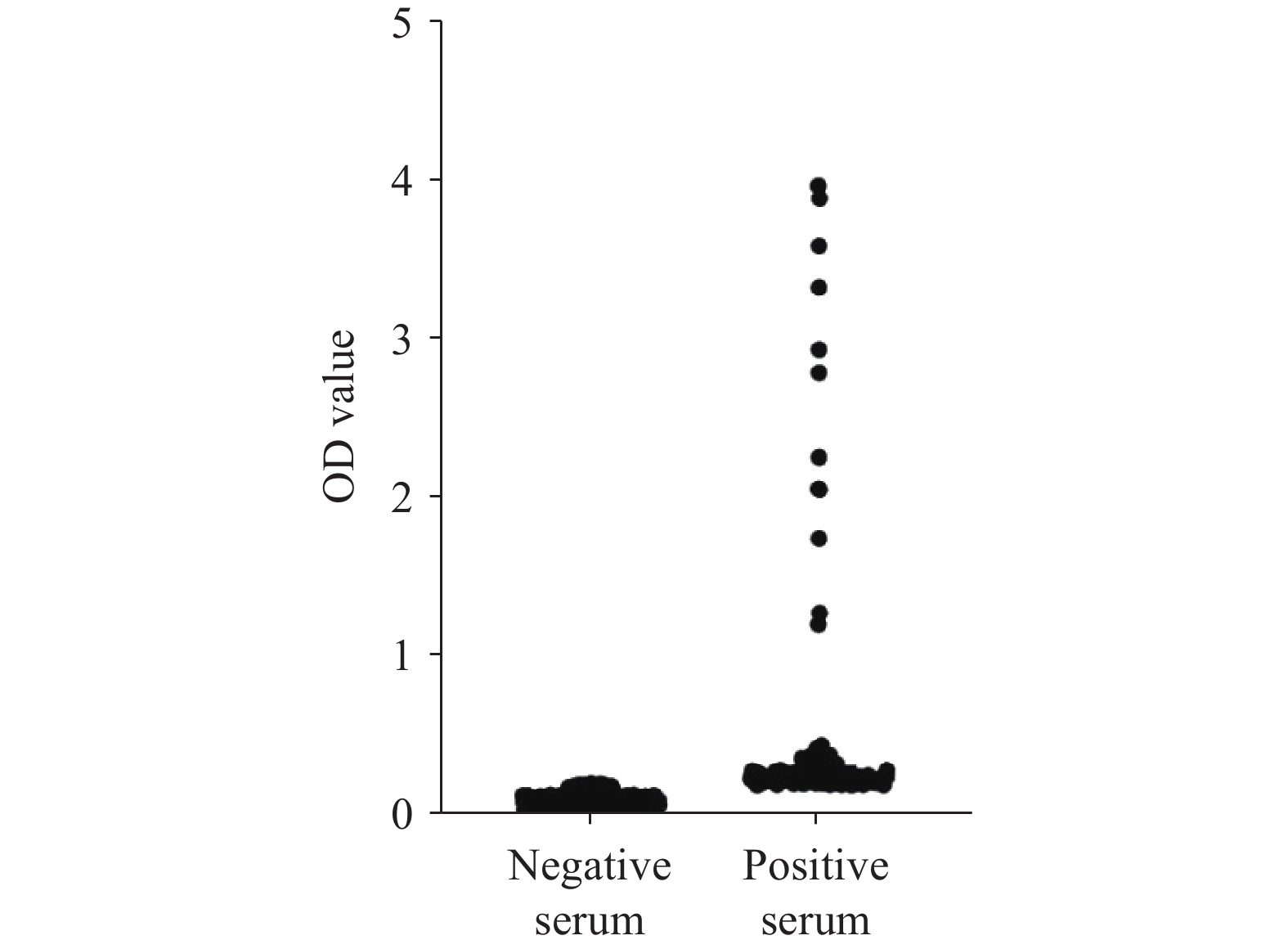 Figure 1.
Statistical analysis of past infection diagnosis using an ELISA kit (NP) in serum samples.
Abbreviation: ELISA=enzyme-linked immunosorbent assay; OD=optical density.In the neutralization assay (NTA), four samples (2 from Jiuquan, 1 from Lanzhou, and 1 from Pingliang) demonstrated reduced viral infectivity, indicating low neutralizing antibody titers (<1∶8). No significant correlation was observed between ELISA optical density (OD) values and either IFA results (P=0.0504) or neutralizing activity (P=0.8815).
Of the 13 individuals who tested positive via both ELISA and IFA, 11 (84.62%) were available for retrospective case review; 2 participants were excluded due to death or loss to follow-up. A structured questionnaire was administered to collect demographic and exposure data. The 11 participants comprised 5 males and 6 females, with an age distribution heavily skewed toward older individuals [median: 65 years; Interquartile Range (IQR): 45–80 years]. All participants were Han Chinese, and the majority were farmers, had an associate degree or lower educational level, and resided in rural areas. More than half of the participants reported no known exposure to rodents (Table 1).
Characteristics Numbers Percentage, % Sex Male 5 45.45 Female 6 54.55 Ethnic group Han 11* 100.00 Occupation/Status Children 2 18.18 Teacher 1 9.09 Medical worker 1 9.09 Unemployed 1 9.09 Farmer 6 54.55 Current residence Rural areas 8 72.73 Urban areas 3 27.27 Education Middle school or below 8 72.73 High school 1 9.09 Junior College 2 18.18 Previous residence Hilly, mountainous, or plateau areas 8 72.73 Plain areas 3 27.27 Outdoor activities† Yes 6 54.55 No 5 45.45 Exposure to rodents§ Denial of any history of exposure to rodents 7 63.64 Unknown/uncertain 4 36.36 Abbreviation: LCMV=lymphocytic choriomeningitis virus.
* One individual died, and another was lost to follow-up. Consequently, of the original 13 people who were intended to be investigated, only 11 were ultimately surveyed.
† Outdoor activities, including farming, mowing, tea-picking, herding, and hunting, among others.
§ Exposure to rodents, including direct contact (such as seeing or being bitten) and indirect contact (such as the ingestion of food or water that may be contaminated).Table 1. Basic characteristics of individuals with past LCMV infections.
The analysis revealed significant associations between occupation and current residence, education level, and past residential history across different groups (Table 2). Furthermore, current residence demonstrated significant variation across different groups with respect to education level (P=0.026).
Characteristics Occupation/Status Sum P* Children Teacher Medical worker Farmer Unemployed Current residence Rural areas 2 0 0 6 0 8 0.024 Urban areas 0 1 1 0 1 3 Education Middle school or below 2 0 0 6 0 8 0.011 High school 0 1 0 0 0 1 Junior college 0 0 1 0 1 2 Previous residence in hilly,
mountainous,
or plateau areasYes 0 1 1 6 0 8 0.023 No 2 0 0 0 1 3 Previous residence in plain areas Yes 2 0 0 0 1 3 0.025 No 0 1 1 6 0 8 * The P value was obtained through 1,000 Monte Carlo simulations. Table 2. Comparison of basic characteristics and behavioral differences among groups of individuals with past LCMV infections.
-
This study assessed LCMV seroprevalence using ELISA and IFA, revealing rates of 18.31% (121/661) and 1.97% (13/661), respectively, among healthy individuals in Gansu Province. These seroprevalence rates are substantially lower than those documented in Finland (4), Hungary (5), Croatia (6), Gabon (7), and other European and African countries. Our findings suggest a lower baseline risk of large-scale LCMV outbreaks in China compared to these regions. However, several ecological and demographic factors in Gansu Province warrant continued surveillance. The natural hosts of LCMV predominantly inhabit grasslands and forests, and Gansu’s extensive vegetation coverage and grasslands (comprising 31% of the land area) provide optimal habitats for these reservoir species, thereby elevating cross-species transmission potential. Furthermore, the province’s low urbanization rate, substantial rural population (47.77%), and relatively high illiteracy rate (6.72%) may facilitate zoonotic pathogen transmission through increased human-animal contact and limited health literacy. Notably, ticks in China have been confirmed to harbor LCMV (8), although the efficiency of tick-borne transmission to humans remains uncertain. The expanding geographical range of LCMV-infected animals and potential vectors underscores the need for enhanced surveillance programs targeting both animal reservoirs and human populations, coupled with strategic interventions to minimize cross-species transmission events.
ELISA detected a higher past infection rate than IFA in our study, reflecting ELISA’s greater sensitivity but lower specificity, which can lead to nonspecific antibody binding. The complexity of human serum, including the presence of heterophilic antibodies and immune complexes, combined with potential cross-reactivity with related viral antigens, may generate false-positive results. Among the three arenaviruses reported in Asia — LCMV, Wenzhou virus (WENV), and plateau pika virus (PPV) — no human WENV infections have been documented to date, and PPV demonstrates only weak serological cross-reactivity with LCMV (9). Therefore, the ELISA results likely provide a reliable indication of past LCMV exposure in this population. Despite these methodological limitations, ELISA remains the preferred tool for large-scale serological screening, with IFA serving as a confirmatory test to enhance diagnostic specificity. Future research should prioritize the development of LCMV-specific diagnostic assays with improved sensitivity and specificity to enable more accurate seroepidemiological assessments.
Neutralizing antibody titers did not correlate with ELISA OD values, consistent with findings reported by Yuri Ushijima (7). The sporadic geographic distribution of seropositive cases likely reflects universal human susceptibility to LCMV combined with the mobility patterns of rodent reservoir hosts. Although four samples exhibited neutralizing activity, titers remained low. Several factors may contribute to weak neutralizing responses, including the route of natural infection, rapid viral clearance, and intrinsic viral properties. Human LCMV infection typically occurs through exposure to fresh urine, feces, saliva, or nesting materials from infected rodents, resulting in low initial viral loads that the immune system can rapidly eliminate. As an Old World arenavirus, LCMV possesses immune evasion mechanisms that may further limit the development of robust neutralizing antibody responses (10).
Past LCMV infections occurred predominantly among farmers, rural residents, and individuals with lower educational attainment — populations that should be prioritized for targeted interventions. However, the limited sample size constrained the statistical power of stratified analyses, introducing some instability into the estimates. Although random sampling and Monte Carlo simulations were employed to address this limitation, results should be interpreted cautiously. Future investigations should incorporate larger sample sizes to generate more robust estimates. Rural socio-environmental conditions and occupational exposures elevate zoonotic transmission risk. Health education campaigns promoting behavioral modifications can effectively reduce LCMV exposure and infection rates. Furthermore, because LCMV presents with nonspecific clinical manifestations, healthcare providers may fail to recognize infection risk. Enhancing clinical awareness among medical personnel, particularly regarding high-risk populations, represents a critical public health priority.
This study has several limitations. First, recall bias may have affected self-reported exposure histories, although trained interviewers employed standardized techniques to minimize this effect. Second, sampling was restricted to 13 cities within Gansu Province, limiting the geographic representativeness and generalizability of findings. Despite these constraints, this investigation successfully documented past LCMV infections in Gansu Province for the first time, fulfilling the primary study objective.
Global concern regarding zoonotic and emerging or reemerging infectious diseases has intensified substantially in recent years. This study provides the first evidence of past LCMV infections in the general population of China, underscoring the potential threat posed by this neglected pathogen. The nonspecific nature of LCMV symptoms makes clinical diagnosis challenging. Although syndromic surveillance systems track multiple pathogens, they continue to detect unidentified disease agents. LCMV should therefore be included in differential diagnoses when investigating unidentified pathogens in surveillance programs.
-
The members of Gansu Province Center for Disease Control and Prevention; Center for Infectious Diseases and Policy Research, Peking University; and National Key Laboratory of Intelligent Tracking and Forecasting for Infectious Diseases, National Institute for Communicable Disease Control and Prevention, Chinese Center for Disease Control and Prevention. Dr. Zhijun Li, U.S. CDC China office, for valuable discussions regarding manuscript preparation. Dr. Gengfu Xiao, Wuhan Institute of Virology, Chinese Academy of Sciences, Center for Biosafety Mega-Science, for generously providing the LCMV Armstrong strain.
-
Approved by The Ethics Committee of the National Institute of Infectious Diseases Control and Prevention, China CDC (approval number: ICDC-LPJ-2024009).
HTML
| Citation: |

|