


 Download:




-
Malaria, one of the ‘Big Three’ infectious diseases, contributed 249 million cases and 608,000 deaths to the global disease burden in 2022, with the WHO African Region bearing a disproportionately high share (1). Recent years have witnessed innovative advancements in malaria control that offer new hope for elimination. The RTS,S/AS01 malaria vaccine now provides additional protection for children living in endemic areas (2-3), while modern malaria rapid diagnostic tests (RDTs) have significantly improved in sensitivity and specificity, delivering fast and reliable results (2). Additionally, emerging engineering technologies that deploy transgenic methods against mosquitoes, such as gene drive, show potential to modify mosquito populations to reduce their reproductive capacity and transmission ability, though these remain in experimental stages (4). However, these advancements face significant challenges. The RTS,S/AS01 vaccine demonstrates compromised efficacy, highlighting the need for more robust vaccines (5). Widespread pfhrp2 gene deletions compromise RDT reliability (6), while emerging drug resistance to artemisinin-based combination therapy (ACT) and mosquito resistance to insecticides driven by evolving vector behaviors (7) present ongoing threats. Ecological concerns regarding gene drive technologies further complicate implementation (8). These challenges, combined with longstanding impediments such as limited service delivery capacity, insufficient operational expertise, and inadequate laboratory infrastructure in endemic areas, underscore the critical need for continued innovation in malaria control to achieve global elimination.
Malaria has historically been one of China’s most serious health challenges. In the 1940s, China reported over 30 million malaria cases annually (9). Nevertheless, China has achieved remarkable progress: zero local transmission cases since 2016 and World Health Organization (WHO) certification as malaria-free in 2021. China’s success in combating malaria can be attributed to a comprehensive range of prevention and control strategies, including strong government commitment to science, evidence-based interventions, and financial support; the establishment of a robust and adaptive surveillance and response system; and continuous capacity building alongside demand-oriented scientific research (10). The 1-3-7 strategy — developed by the National Malaria Elimination Program in 2010 and extensively implemented in early 2012 — has been recognized as critical to China’s malaria elimination. This strategy refers to reporting malaria cases within one day, confirming and investigating cases within three days, and implementing appropriate responses to prevent further transmission within seven days (11).
In parallel, China has made significant strides in malaria-related research and product development (12). The discovery of artemisinin, originating from “Project 523” in 1967 and later earning Professor Tu Youyou the Nobel Prize in Physiology or Medicine in 2015, revolutionized malaria treatment globally (13). ACTs, endorsed by WHO as first-line and second-line treatments for malaria, have saved millions of lives (14). Beyond artemisinin, China’s research progress in other innovative products is also noteworthy, including insecticide-treated nets (ITNs) for preventing mosquito bites (15), genetically modified mosquitoes for transmission control (16), the PfCP-2.9 blood-stage vaccine for malaria, which has entered clinical studies, and additional vaccine candidates in various R&D stages (17).
Despite growing international recognition of China’s malaria elimination achievements, there remains a lack of systematic, evidence-based documentation, particularly regarding advances in diagnosis and vector control. This gap hinders further innovation and limits the global application of China’s contributions. While the Malaria Eradication Research Agenda (malERA) emphasizes the importance of R&D to interrupt transmission (18), the increasing global malaria burden highlights the need for more effective tools and strategies. Given these challenges and the limited literature summarizing China’s malaria innovation from a global health perspective, this scoping review aims to provide a comprehensive overview of malaria R&D in China from 2013 to 2023, identifying progress, gaps, and opportunities to contribute to global malaria elimination efforts.
-
This study was meticulously designed following the Preferred Reporting Items for Systematic Reviews and Meta-Analyses extension for Scoping Reviews (PRISMA-ScR) checklist (19) to ensure methodological rigor and international generalizability. We implemented a pilot review phase where two reviewers jointly screened approximately 20 publications during in-person and online meetings under the guidance of an experienced reviewer. Following this initial screening, the team conducted collaborative discussions to critically evaluate outcomes and make necessary adjustments to the screening and data extraction protocol before proceeding to the full scoping review.
-
Our review incorporated search strategies encompassing both English and Simplified Chinese data sources to comprehensively capture emerging innovation information. English data sources included PubMed (https://www.ncbi.nlm/nih.gov/pubmed/), Web of Science (https://www.webofscience.com/), and ScienceDirect (https://www.sciencedirect.com), while Chinese data sources comprised local databases including China National Knowledge Infrastructure (CNKI, https://www.cnki.net/) and Wanfang (https://www.wanfangdata.com.cn/). The specific search strategies employed for each database are presented in Table 1. To address potential meaning discrepancies arising from English-Chinese language translation, two independent researchers conducted reverse translation verification. Translation references for keywords used in the Chinese literature search strategy are provided in
Supplementary Table S1 . The final literature search was completed in December 2023.Database Search time Key words Article type Publication time range PubMed 2023.12.2 (Malaria [title] OR malaria [Mesh] OR plasmodium [title] OR anopheles [title] OR artemisinin [title] OR quinine [title]OR vector [title] OR parasite [title])AND (control [title] OR product* [title] OR technolog*[title] OR prevention[title] OR vaccin*[title] OR screening [title] OR diagnosis [title] OR treatment [title] OR rehabilitation [title] OR recovery [title] OR medicine [title] OR biology* [title] OR pathway [title] OR mechanism [title] OR novel [title] OR drug* [title] OR residual spraying [title] OR potential [title] OR efficacy [title])AND (China [all fields] OR Chinese [all fields]) All 2013–2023 Web of Science 2023.12.2 AB=((Malaria OR plasmodium OR anopheles OR artemisininOR quinine OR vector OR parasite )AND (control OR product* OR technolog* OR prevention OR vaccin* OR screening OR diagnosis OR treatment OR rehabilitation OR recovery OR medicine OR biology* OR pathway OR mechanism OR novel OR drug* OR residual spraying OR potential OR efficacy )AND (China OR Chinese)) All 2013–2023 ScienceDirect 2023.12.2 Term: "control" OR "product" OR "products" OR "technology" OR "technologies" OR "prevention" OR "vaccine" OR "vaccines" OR "vaccination" OR "screening" OR "diagnosis" OR "treatment" OR "rehabilitation" OR "recovery" OR "medicine" OR "biology" OR "pathway" OR "mechanism" OR "novel" OR "drug" OR "drugs" OR "residual spraying" OR "potential" OR "efficacy"
AND
TI:"Malaria" OR "plasmodium" OR "anopheles" OR "artemisinin" OR "quinine" OR "vector" OR "parasite"
Find articles with these terms:"China" OR "Chinese"Research Articles 2013–2023 CNKI 2023.12.2 ((TI=‘疟疾’) OR (TI=‘疟原虫’) OR (TI=‘蚊’) OR (TI=‘青蒿素’) OR (TI=‘奎宁’) OR (TI=‘寄生虫’)) AND ((TI=‘控制’) OR (TI=‘产品’) OR (TI=‘技术’) OR (TI=‘预防’) OR (TI=‘疫苗’) OR (TI=‘筛查’) OR (TI=‘诊断’) OR (TI=‘治疗’) OR (TI=‘康复’) OR (TI=‘药物’) OR (TI=‘生物’) OR (TI=‘通道’) OR (TI=‘机制’)) Academic Study 2013–2023 Wanfang 2023.12.2 题名或关键词:((疟疾 OR 疟原虫 OR 蚊 OR 青蒿素 OR 奎宁) AND (控制 OR 产品 OR 技术 OR 预防 OR 疫苗 OR 筛查OR诊断 OR治疗OR康复 OR药物OR生物OR通道OR机制)) All 2013–2023 Table 1. Search strategies applied in the databases.
-
The inclusion and exclusion criteria were developed through two rounds of internal discussions among researchers. Initially, we defined innovation products in malaria based on the framework identified by Chibi et al. (20): technology and device developments in surveillance, microplanning, prevention, diagnosis, and treatment of malaria. Subsequently, we established our specific inclusion and exclusion criteria, which are detailed in Table 2.
Category Inclusion Exclusion Language English and Chinese Languages other than English and Chinese Author affiliation information At least one of the first or corresponding authors’ primary (first listed) affiliation is an institute located in China None of the first or corresponding authors’ primary affiliation is an institute located in China Accessibility Open access Limited access Study design Empirical studies: Observational studies (clinical trials, cohort, case–control, cross-sectional, case-crossover, ecologic, case series, case reports) assessing the effectiveness of certain interventions;
Health technology Assessment (HTA) studies
qualitative studies; reviews (systematic, scoping) and meta-analyses.
Non – empirical studies: (e.g., commentary, some of the editorial pieces, erratum etc.)Study of animals, cells, or other non-human subjects
Basic research at genetic or molecular levels without field or semi-field experimental data;
Development of analytical tools or strategies;
clinical guidelines and interpretation of them;
causal inference studies to identify risk factors;
Non – empirical studies: (e.g., commentary, some of the editorial pieces, erratum etc.)Objective To introduce or examine an innovative malaria product satisfying the definition* Other objectives than introducing or examining an innovative malaria product satisfying the definition* Result Result of the study should expose the application information of the product. No focus on the product or no expose of the product application information. Study time 2013 to 2023 Before 2013 or after 2023 * The definition: technology and device developments in surveillance, microplanning, prevention, diagnosis, and treatment of malaria (20). Table 2. Inclusion and exclusion criteria of the scoping review.
-
Critical appraisal checklists developed by the Joanna Briggs Institute (JBI), an international research organization specializing in evidence-based healthcare, were utilized for quality assessment of the studies, including Diagnostic Test Accuracy Studies, Quasi-Experimental Studies, and Case Reports (21–23). For each study meeting the inclusion criteria, the corresponding critical appraisal aligned with its study design was applied to evaluate quality. Two independent researchers conducted the data inclusion-exclusion process using EndNote X9 (Clarivate, Philadelphia, USA) before submitting the individual checklist outcomes for each study to the entire research team for final inclusion-exclusion determination.
-
Evidence charting and synthesis were performed in accordance with the 2020 updated scoping review methodological guidelines by the JBI team (24). For included studies, evidence charting focused on a) the major research institution of the first author or corresponding author, b) the innovative products introduced in the study, c) the nationality of the participating institutes, d) the major challenges and opportunities, e) the study language, and f) research progress. During the evidence synthesis process, we categorized the data into clusters of prevention, diagnosis, and treatment based on the definition of malaria product innovation from Chibi, Wasswa, Ngongoni, Baba and Kalu (20). Two researchers conducted evidence extraction and data charting using Microsoft Excel 2016 (Microsoft Corp., Redmond, WA, USA).
-
A total of 11,112 English articles were retrieved, including 1,311 from PubMed, 7,102 from Web of Science, and 2,699 from ScienceDirect. After removing 269 duplicates, 10,615 articles were excluded based on title and abstract review. Full-text review led to the exclusion of 151 articles that did not meet inclusion criteria, 27 articles with unavailable full texts, and 1 article duplicated in Chinese literature. Following JBI quality assessment, 5 papers were rejected due to inadequate experimental design. Ultimately, 44 English articles were included in the final analysis.
For Chinese literature, 2,944 relevant articles were retrieved, including 1,275 from Wanfang and 1,669 from CNKI. After removing 362 duplicates, 2,468 articles were excluded based on title and abstract review. Full-text review led to the exclusion of 91 articles that did not meet inclusion criteria and 8 articles with unavailable full texts. One article published in both Chinese and English was included only in its Chinese version. Following JBI quality assessment, 2 papers were rejected due to inadequate experimental design. Ultimately, 13 Chinese articles were included in the final analysis.
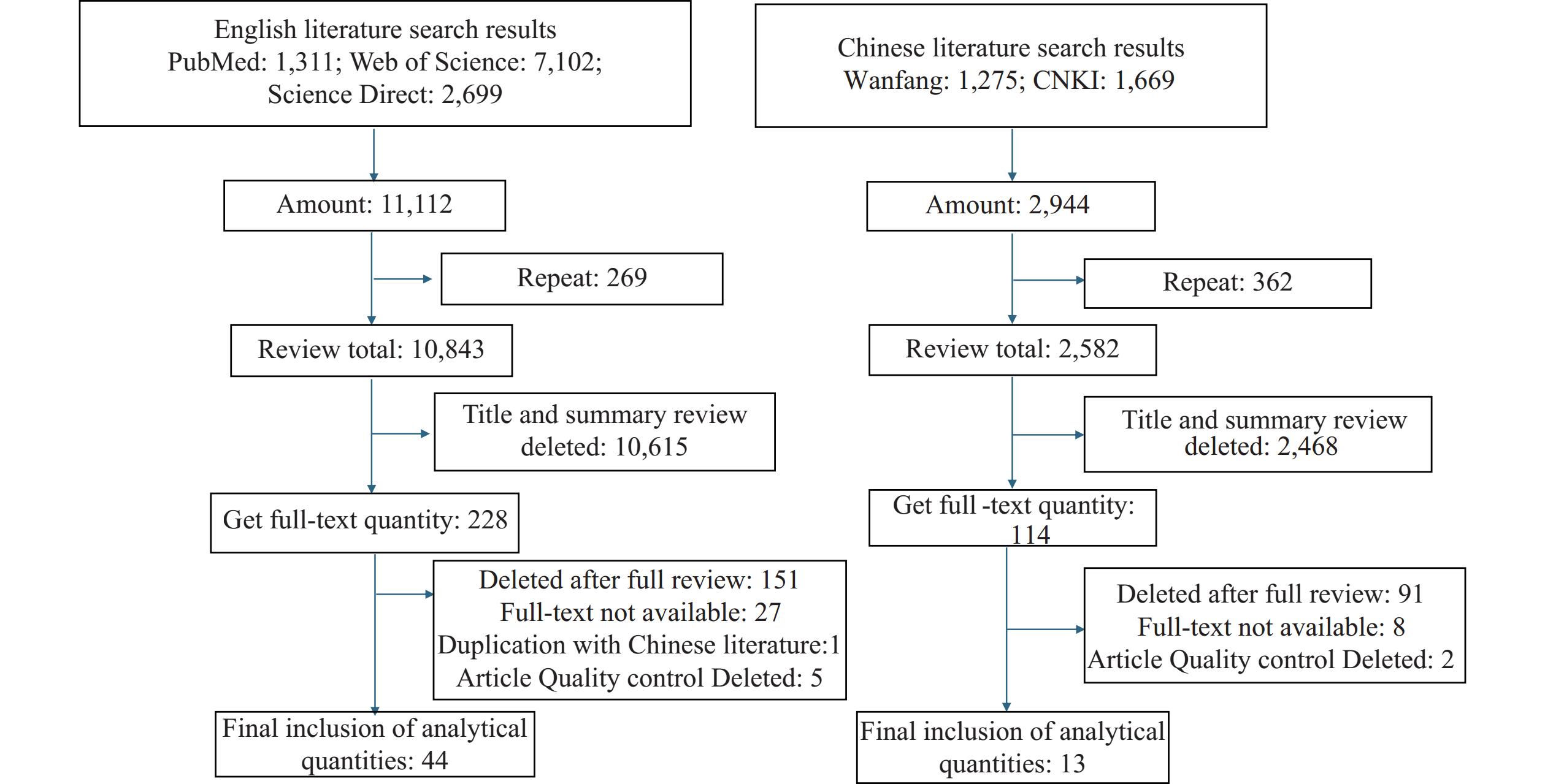 Figure 1.
Screening process and results of literature review.
-
Figure 2 illustrates the annual distribution of Chinese and English publications from 2013 to 2023. The number of English publications consistently exceeded Chinese publications throughout the study period. From 2017 to 2023, English publications maintained relative stability at approximately six publications per year. In contrast, Chinese publications were fewer in number and showed greater fluctuations. English publications peaked in 2018 and 2021 with six entries each, followed by a slight decline while maintaining stability. Chinese publications remained scattered across other years with only one or two entries annually. The predominance of English publications in both quantity and yearly consistency suggests either greater international attention to the research topic or a more globally oriented approach to disseminating research outcomes.
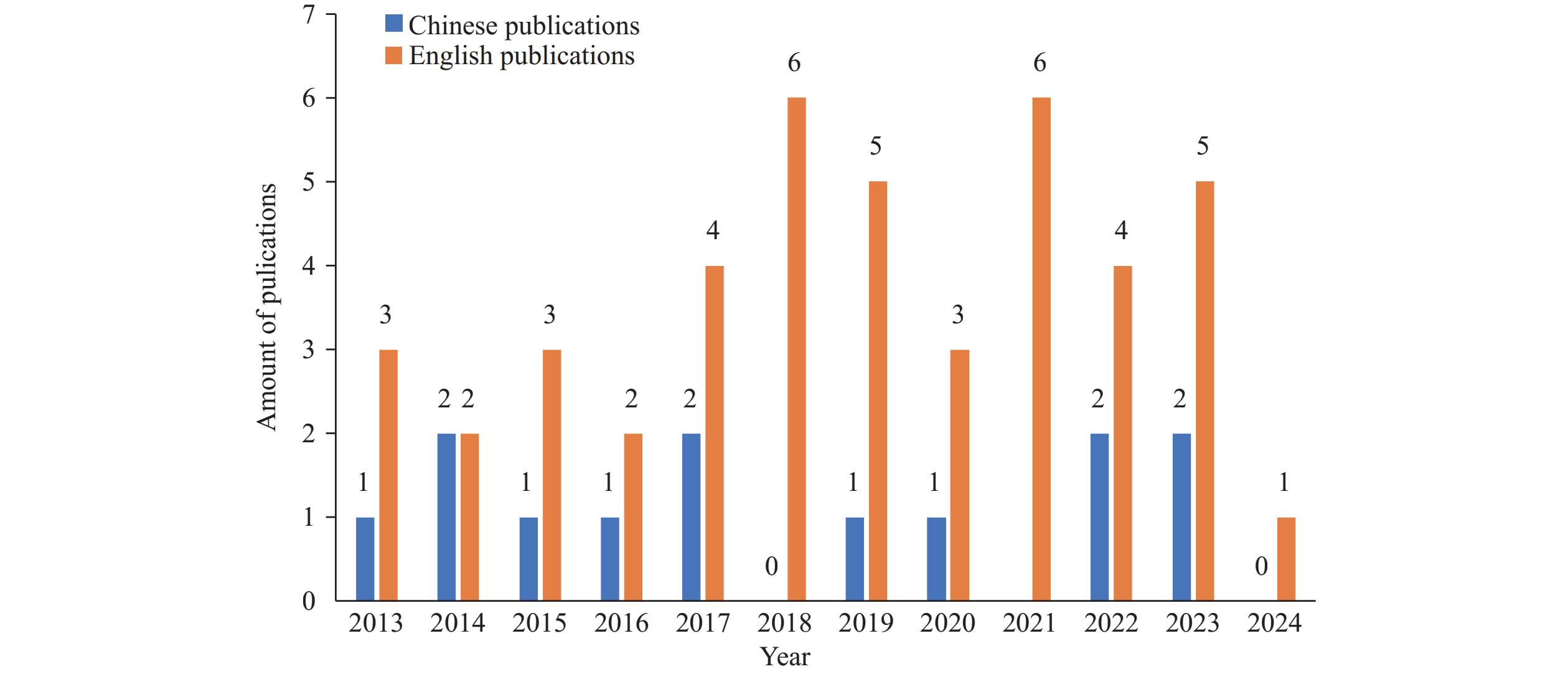 Figure 2.
Distribution of publications by year.
-
The affiliated institutions in China conducting malaria research primarily include universities, research institutes, hospitals, disease control centers, and enterprises. Among the publications reviewed, 36 had first or corresponding authors from universities, 12 from research institutes, 9 from hospitals, 3 from disease control centers, and 2 from firms, with 3 from other enterprises or institutions.
In our literature review, 37 articles represented collaborations exclusively among Chinese institutions (11 in Chinese and 26 in English), while 10 involved collaborations with the United States and 2 with Pakistan. Additional collaborative research was conducted with institutions in Australia, Sweden, France, Germany, Italy, Colombia, India, Gabon, Niger, Sierra Leone, and Iraq.
-
Based on our research review, malaria control technologies primarily focus on three key areas: vector control, pathogen screening and diagnosis, and prevention and treatment. For detailed information regarding specific Malaria R&D innovations, their development stages, and other related information mentioned in these results, please refer to the
Supplementary Table S1 . Significant advancements have been achieved in each area, as detailed below: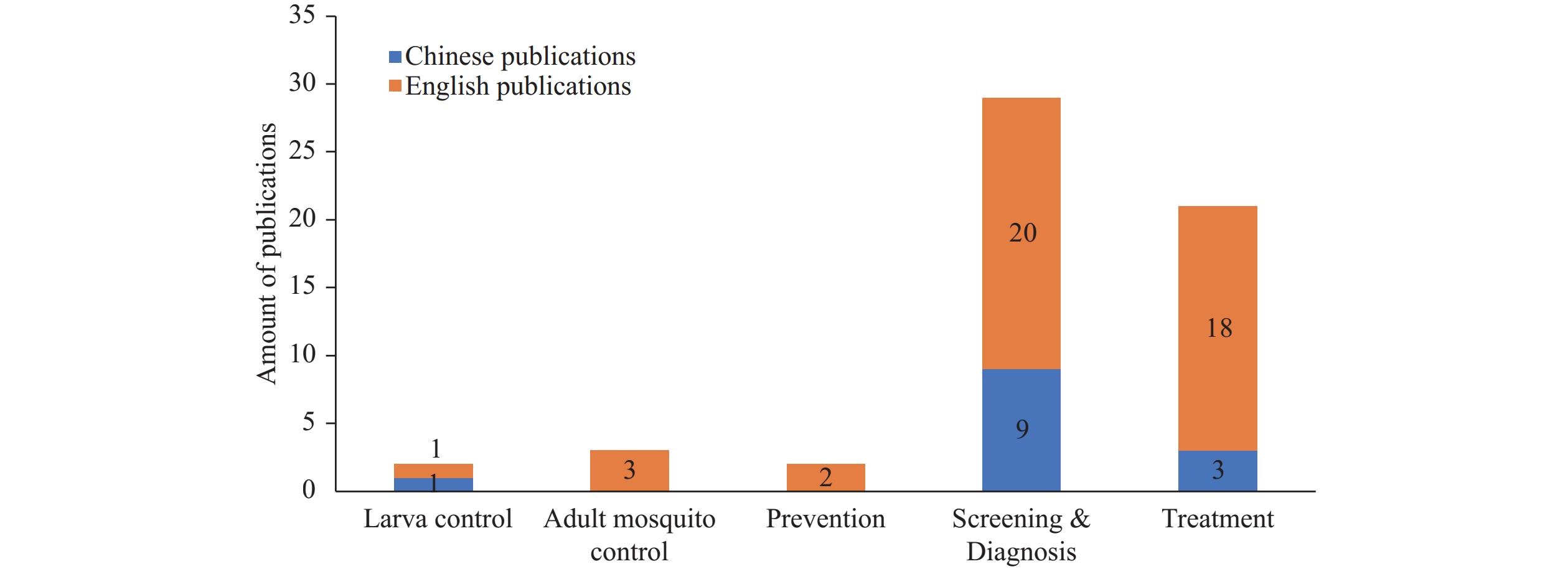 Figure 3.
Prevention and treatment phases cited by literature.
-
Research on vector control primarily focuses on larval control and adult mosquito interventions. In larval control, two published studies have examined Capture and Ligation Probe-PCR (CLIP-PCR) and recombinase-mediated constant temperature amplification (RAA). For adult mosquito control, Professor Sibao Wang’s team has conducted two studies on Serratia strains (Y1 and J1) isolated from field-caught female Anopheles sinensis from China, assessing their effect on Plasmodium development in An. stephensi, as well as the symbiont-mediated RNAi (smRNAi) approach. Additionally, Professor He Qi’s team has investigated the efficacy of Zanthoxylum acanthopodium essential oil as a vector control agent.
-
In the area of pathogen screening and diagnosis, we categorize advancements into instrument innovation, technological innovation, and analytical method innovation.
-
Development, such as the Portable Microfluidic Aptamer-Tethered Enzyme Capture (APTEC) Biosensor for Malaria Diagnosis, which detects changes in red blood cell and platelet parameters in patients with malignant malaria.
-
Innovation encompasses AI monitoring, software and big data integration, and platform construction. The University of Hong Kong has developed whole genome sequencing and big data analysis technology for Plasmodium falciparum, establishing a genome polymorphism database and variation and evolution analysis model.
Analytical method innovation represents significant progress beyond traditional pathogen screening methods that relied on blood films and malaria antigen detection. Currently, there are 8 advancements in staining malarial parasites and serological detection, alongside 20 new amplification gene, nucleic acid, and protein detection technologies.
-
Artemisinin-based combination therapy, currently the most important weapon in the global fight against malaria, is the first-line antimalarial treatment vigorously promoted by the World Health Organization. Among the treatment and prevention advancements identified, 8 (57.1%) are related to artemisinin. Currently, 15 technologies have progressed to field and semi-field testing stages. Additionally, 11 advancements have been made in industrial pharmaceuticals.
Through this literature review, we found that malaria research in China is primarily conducted by universities, with major international collaborations involving institutions in the United States, Europe, and Australia. Research efforts concentrate on pathogen screening and diagnosis, with several technologies having advanced to field and semi-field testing stages.
-
This scoping review identified key innovations in China’s malaria-related R&D across three domains: vector control, diagnostic technologies, and prevention and treatment.
-
Despite global progress in malaria R&D, significant gaps persist in addressing drug and insecticide resistance, RDT sensitivity, cost-effectiveness, and detection of asymptomatic cases (25–30). China’s R&D trends offer promising solutions to these challenges and complement global efforts, with many innovations focused on improving the sensitivity, cost-effectiveness, and accessibility of malaria interventions. Non-chemical vector control methods, including the smRNAi approach and the use of Zanthoxylum acanthopodium essential oil, provide alternatives that reduce dependence on insecticides (31). These environmentally sustainable approaches can mitigate the rise of insecticide resistance, particularly in regions where traditional methods have become less effective (32). Additionally, China’s advancements in vector control, such as CLIP-PCR technology, enhance the precision and efficiency of vector management, enabling more targeted interventions in areas with diverse Anopheles species. In diagnostics, aptamer-mediated diagnostic systems and AI-based platforms for analyzing thin-blood smears address critical shortcomings of existing tools. These technologies potentially offer higher sensitivity, rapid results, and simpler application in field conditions. By making malaria diagnostics more accessible and affordable, these advancements show promise for strengthening surveillance systems and ensuring timely treatment. China has also made significant contributions to next-generation malaria vaccines by enhancing the immunogenicity of Plasmodium antigens and developing novel vaccine candidates. In drug delivery and chemoprevention, China’s innovations include novel delivery systems such as lipid emulsions for intravenous administration of artemisinin and other antimalarial drugs (33). These systems improve drug absorption and address challenges in treating severe malaria and multidrug-resistant strains.
-
Globally, malaria R&D has been supported by robust funding mechanisms, partnerships, and the application of innovations in malaria-endemic regions. In contrast, China faces limited R&D partnerships, funding mechanisms, and global application of innovative tools. In terms of partnerships, global efforts often emphasize collaborations with private enterprises and international organizations through public-private partnerships (PPPs). These collaborations have driven the rapid translation of innovations into field applications. In China, however, partnerships with private enterprises remain underdeveloped, limiting the scalability and deployment of novel tools. Regarding funding mechanisms, most of China’s malaria R&D relies on domestic funding, such as the National Natural Science Foundation of China (NSFC). International funding mechanisms such as the Bill & Melinda Gates Foundation (BMGF) and PATH are currently supporting China’s malaria R&D and their application to malaria-endemic regions. Nevertheless, there remains a substantial funding gap for China’s malaria R&D. In terms of application of China’s innovative malaria products, the country’s malaria-free status makes it difficult for researchers to find suitable fields for applying their products domestically. Applying these products in malaria-endemic regions outside China would be an alternative, but insufficient funding and lack of local partners and experience, including unfamiliarity with foreign regulations and additional coordination requirements, restricts their global impact. These factors inhibit China’s R&D from contributing effectively to global malaria elimination efforts.
To maximize the global impact of China’s malaria-related R&D, the following strategies should be considered. First, strengthening partnerships with international organizations, such as the WHO, Global Fund, and the Roll Back Malaria Partnership. These partnerships can not only ensure China’s innovations are aligned with global health priorities, but also help to refine existing technologies and ensure their successful deployment in malaria-endemic regions, ultimately facilitating faster uptake of Chinese innovations on the global stage. Second, developing close collaboration with local research institutions and government agencies such as malaria programmes. China’s innovations must be adapted to local contexts in malaria-endemic regions. Collaboration with local institutions, malaria programmes, and health authorities will ensure solutions developed in China are accessible and culturally appropriate (34). Third, increased investment and PPPs in translational research are needed to bridge the gap between laboratory research and field implementation. This includes support for clinical trials, regulatory approvals, and the commercialization of products. Promoting policies that foster collaboration between research institutions, government agencies, and private enterprises is essential to accelerate the development and deployment of malaria-related products (35). Fourth, streamlining the process for regulatory approvals of China’s malaria innovations. Collaborations with WHO and other international, regional, and local health organizations such as the African Medicines Agency (AMA), can facilitate the approval of malaria-related products in various markets, ensuring their widespread use (20,36-37). Fifth, capacity building should be delivered within local health systems for healthcare workers, researchers, and policymakers during the implementation of these innovations. This will not only ensure that new technologies are used effectively, but also support local malaria programmes in strengthening their ability to achieve elimination goals (38). Lastly, the competencies of those engaging in China’s global malaria efforts should also be strengthened to ensure a smooth translation and application of China’s domestic products and expertise to foreign contexts (39-40). Improved global health competencies will promote trust with local counterparts and facilitate the adaptation of products and technologies.
This scoping review has several limitations. Firstly, we only searched the peer-reviewed literature and did not include grey literature from government, institutional, and enterprise websites. This omission could result in missed information, particularly from companies. Our previous investigations have shown that many Chinese companies do not publish their technologies unless collaborating with research entities. Secondly, although we used an appraisal checklist to assess the quality of the publications, we were unable to evaluate the effectiveness of the identified advancements. Lastly, the final literature search was conducted at the end of 2023, which may limit the timeliness of the findings.
-
China’s malaria R&D offers innovative solutions to global challenges. Advancements in non-chemical vector control, diagnostics, and vaccines demonstrate China’s potential to complement global malaria elimination efforts. To maximize impact, we call for global attention to strengthening international collaboration with China in malaria R&D to accelerate the commercialization, regulatory approval, and large-scale deployment of innovations.
HTML
Study Design
Search Strategies
Inclusion and Exclusion Criteria
Quality Assessment
Data Analysis
Description of Included Studies
Annual Distribution of Chinese and English Publications
Affiliated Institutions and Collaborators
Applicable Technologies in Malaria Prevention, Diagnosis, and Treatment
Vector control
Pathogen screening and diagnosis
Instrument innovation primarily focuses on biosensor
Technological
Prevention and treatment
Significance and Potential of China’s Innovations
Promoting China’s R&D to Accelerate Global Malaria Elimination
| Citation: |

|